Catedral Primada de América
The Catedral Primada de América: Santa Iglesia Catedral Basílica Metropolitana de Nuestra Señora Santa María de la Encarnación o Asunción is in the heart of the Colonial City in Santo Domingo. It represents one of the most important religious and architectural landmarks in the Americas. The Cathedral combines more than five centuries of history, religious traditions, and European architecture. For student groups and curious travelers, the Catedral Primada de América offers a direct way to explore the early history of Santo Domingo and the development of Christianity in the New World.
A Cathedral Born in the Early Colonial Period
The story of the Catedral Primada de América began soon after Santo Domingo became an important Spanish settlement in the New World. Early religious buildings used simple materials, including wood and thatch. Church leaders soon wanted a permanent structure that reflected the growing importance of the city. Pope Julius II authorized the creation of the diocese in 1504. Construction developed over several stages during the following decades.
The Catedral Primada de América also reflects the work of several important figures from the colonial period. Bishop Alessandro Geraldini arrived in Santo Domingo in 1519 and pushed for a more ambitious church design. The research places the laying of the foundation stone in 1521 and identifies coral limestone as the main building material. Other historical notes place the first stone in 1514, showing that construction developed gradually rather than through one single building campaign.
The First Cathedral of América reached completion in 1541, according to the research, after several decades of work. Luis de Moya and Rodrigo de Liendo contributed to the design and construction. The cathedral later gained greater ecclesiastical importance. In 1546, Pope Paul III elevated it to the status of a Metropolitan Cathedral and granted it the title of Primate of America.
A Witness to Colonial History
The Catedral Primada de América also witnessed major events during the colonial period. In 1586, English privateer Sir Francis Drake captured Santo Domingo. He used the cathedral as his headquarters during the occupation. His forces removed valuable artifacts, treasures, and damaged parts of the building. This episode shows how religious buildings could also become involved in military and political conflicts during the colonial era.
For students, the First Cathedral provides an opportunity to connect religious history with broader subjects. A visit can support lessons about European expansion, colonial administration, architecture, Christianity, and cultural exchange. Travelers interested in history can also observe how one building reflects different periods in the development of Santo Domingo.
Three Architectural Traditions in One Building
The First Cathedral of Americas is notable for its architecture, which combines several European styles. Construction continued for decades, allowing different artistic influences to appear in the building. Late Gothic architecture forms the structural foundation. Plateresque decoration adds Spanish Renaissance elements. Early Baroque details appear in parts of the interior.
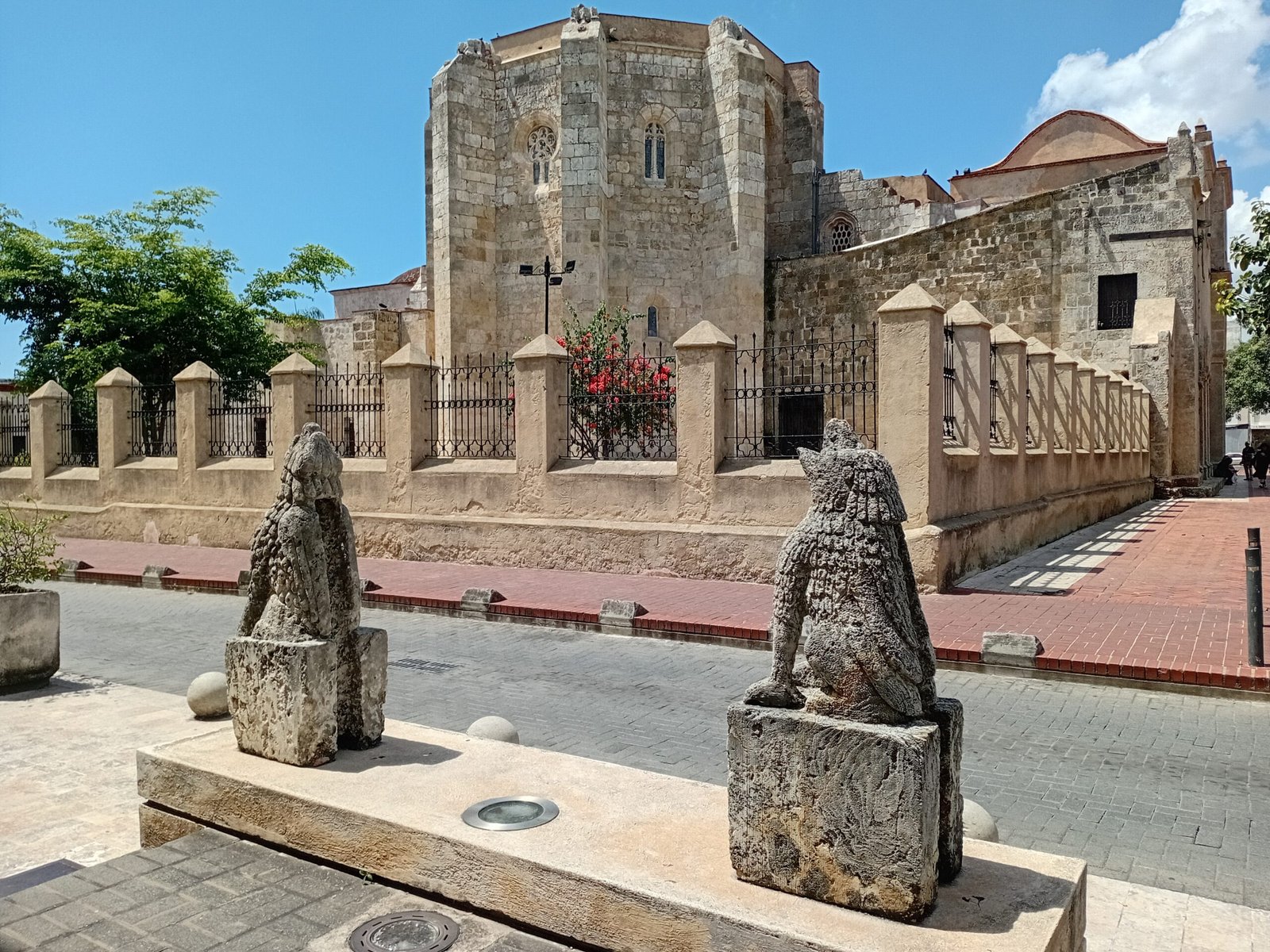
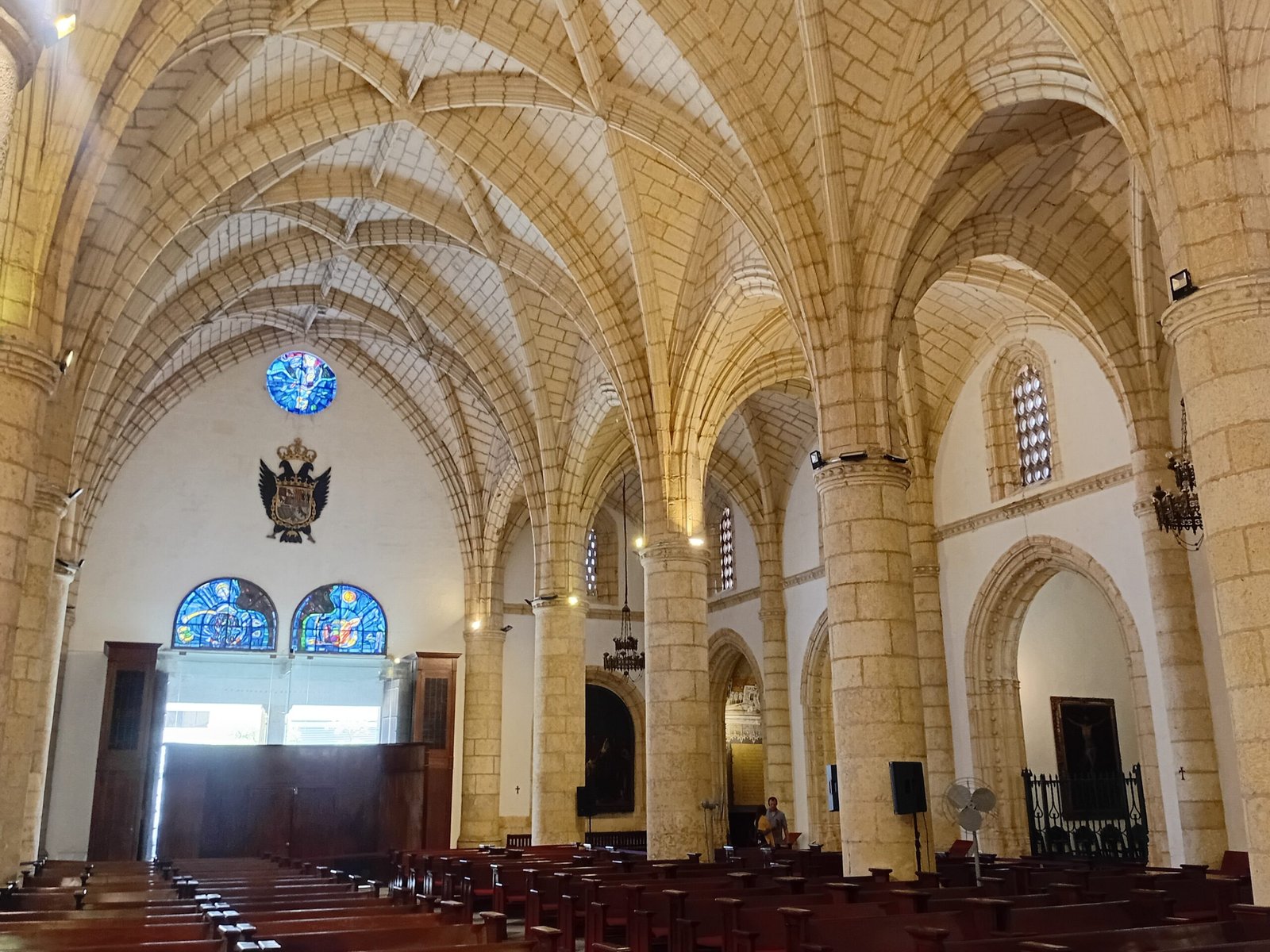
The Cathedral shows Gothic influence through its thick walls, strong proportions, and ribbed vaults. These features help and support the large structure. The building also uses buttresses and other elements associated with Gothic construction. Students studying architecture can see how European building traditions were adapted to the Caribbean environment.
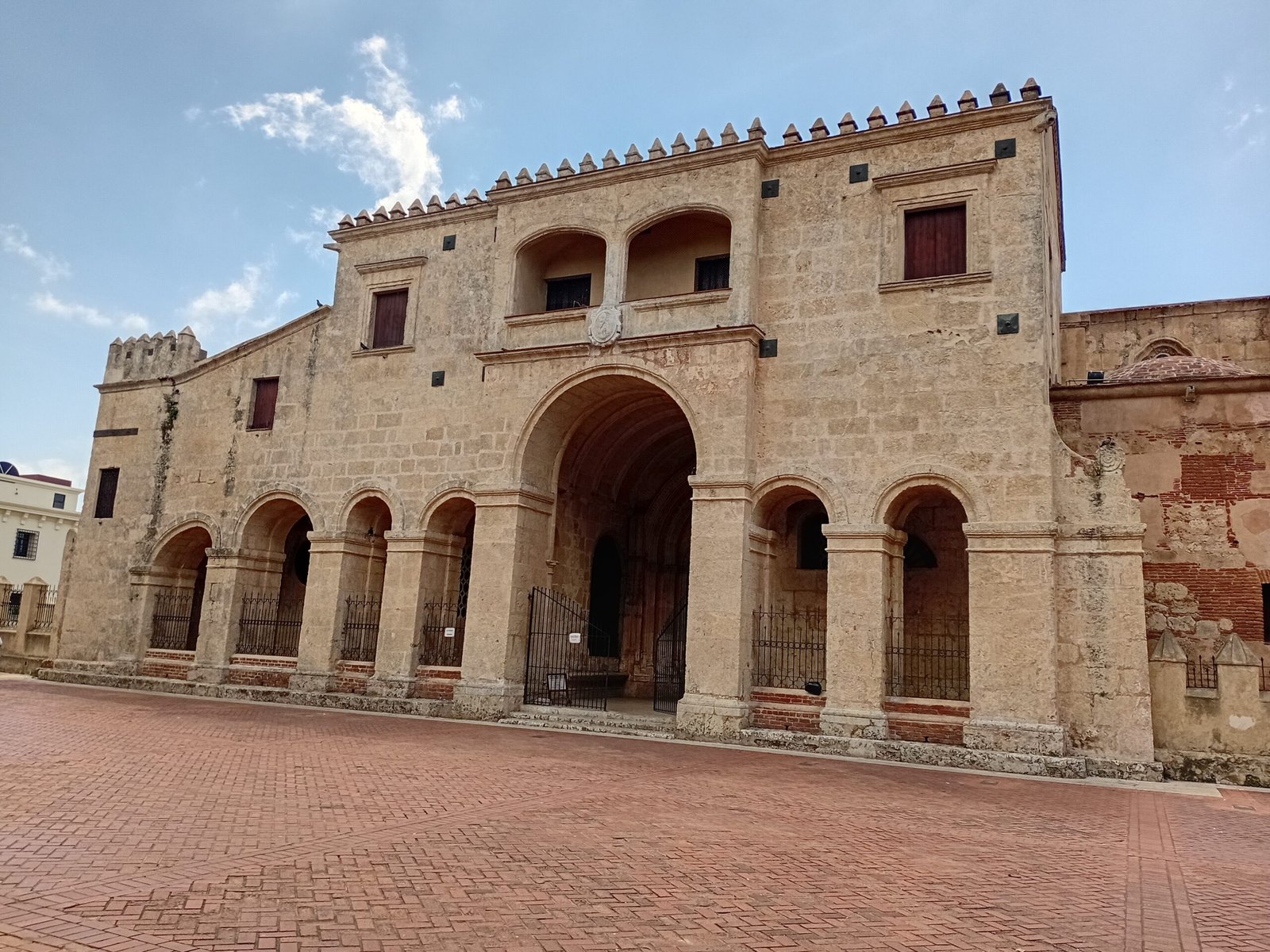
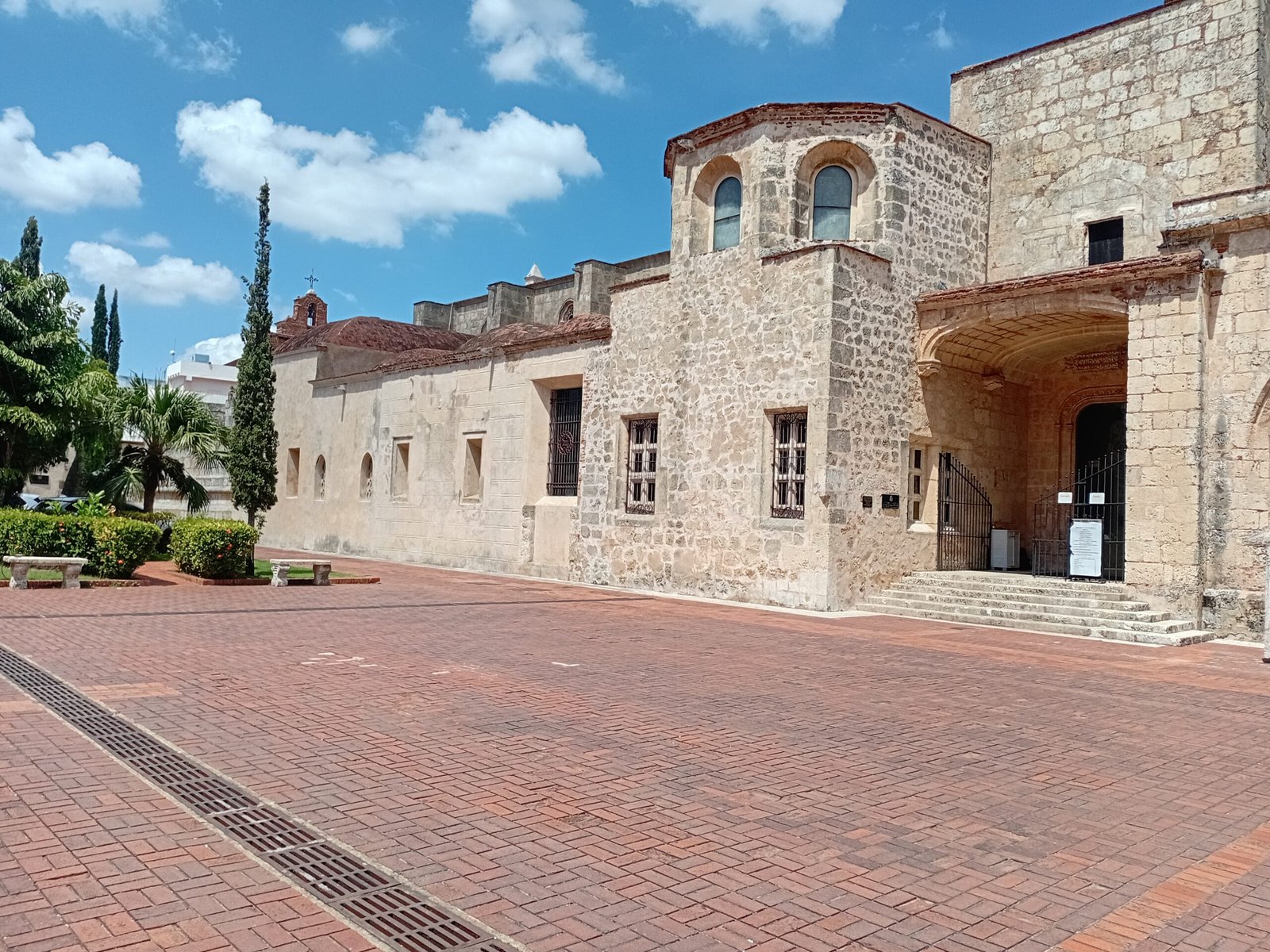
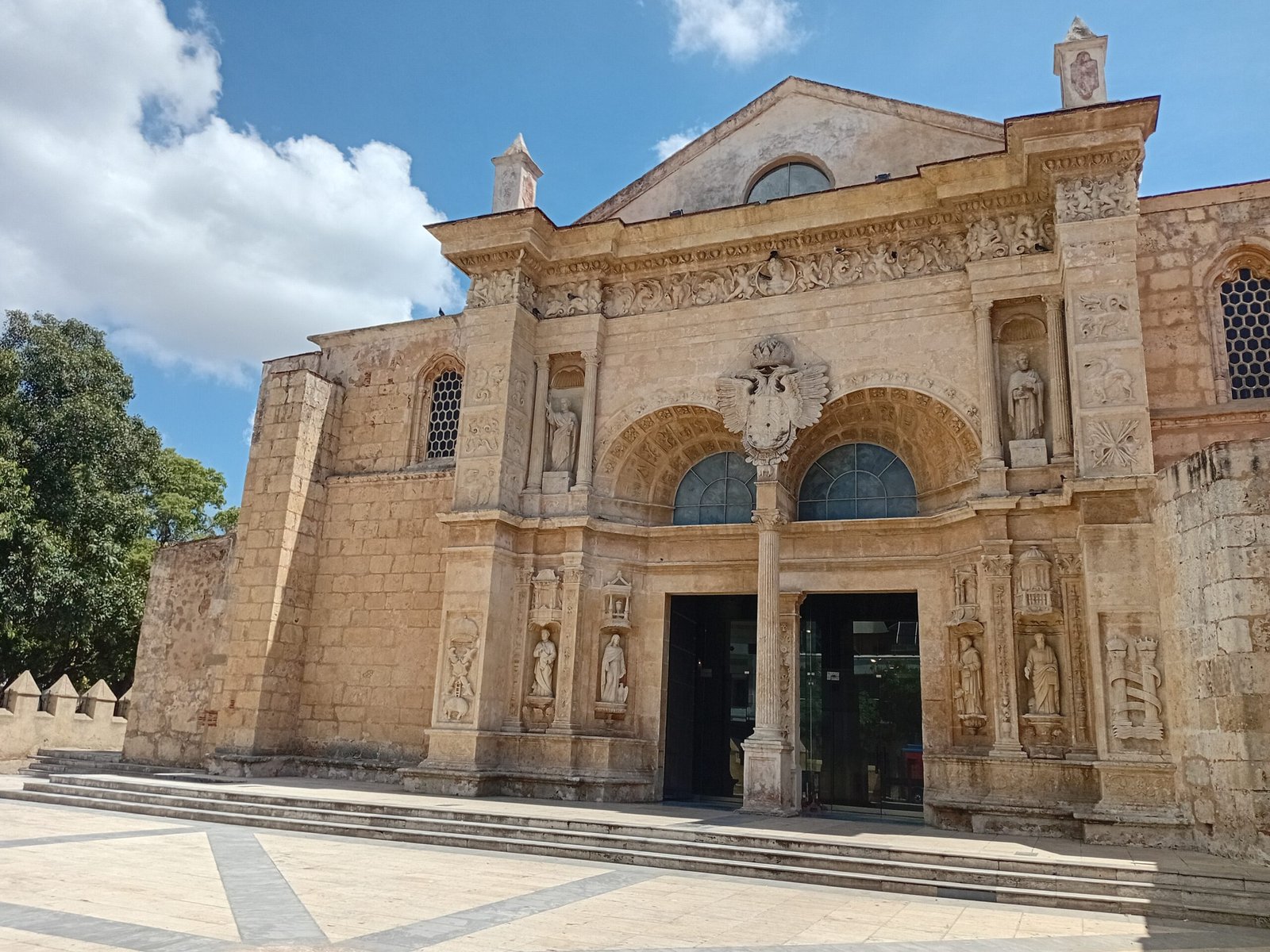
From the outside, the Catedral Primada de América has a distinctive appearance. Its golden-colored coral limestone changes in tone as sunlight moves across the facade. The main western portal features Plateresque decoration. Visitors can see carved floral designs, classical elements, mythical creatures, and imperial coats of arms. The incomplete bell tower also gives the cathedral a distinctive silhouette.
Inside the Cathedral
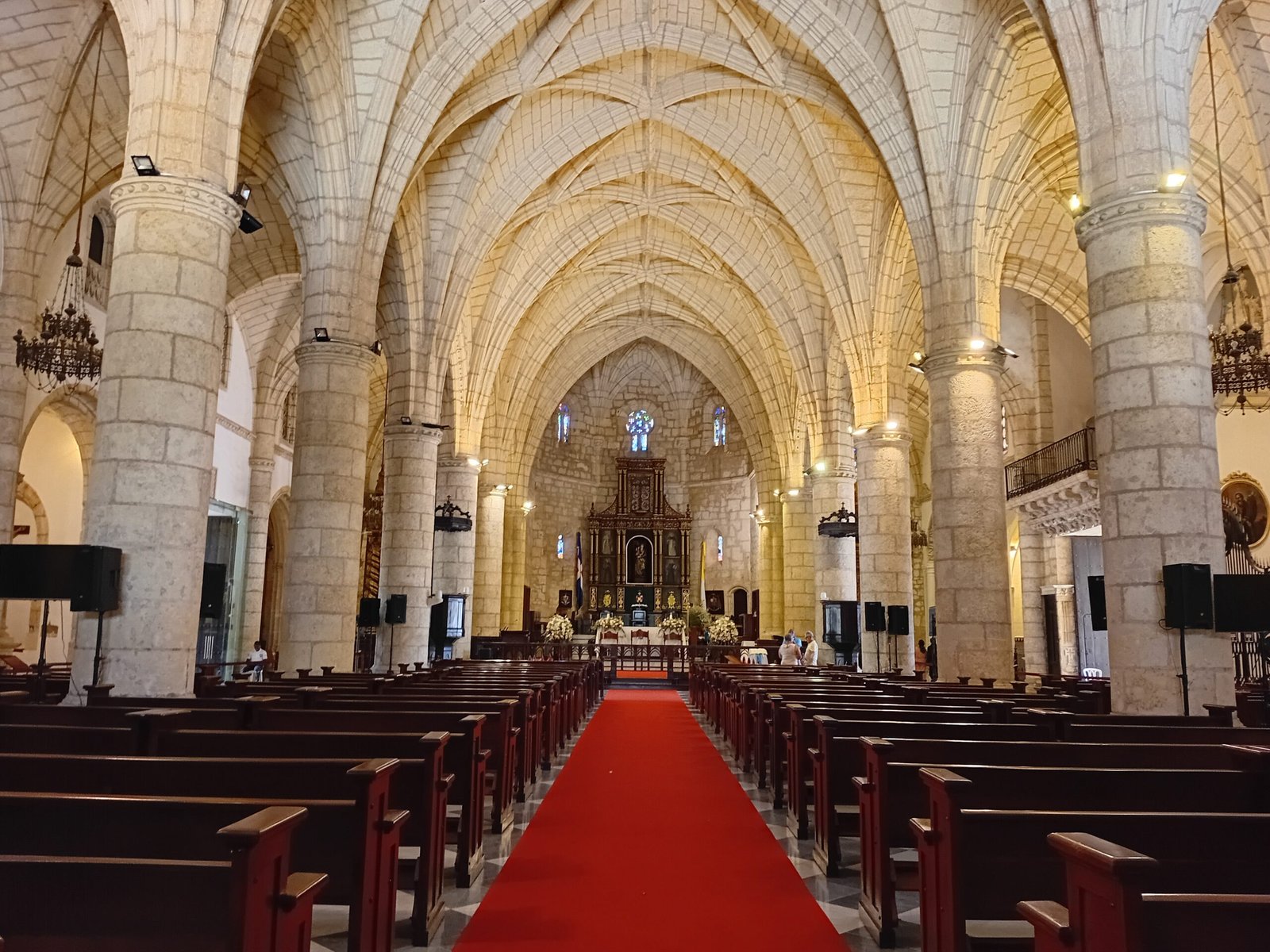
The Catedral Primada de América reveals a spacious interior organized around three naves. The central nave rises higher than the side aisles. Its slender stone columns seem to grow like palm trees, with the ribs spreading above them like palm fronds. The vaulted ceiling creates the impression of a canopy made from stone leaves. This distinctive design connects the Gothic structure with the tropical environment of the Caribbean. For students interested in architecture, the interior offers a fascinating example of how European building traditions took shape in the New World.
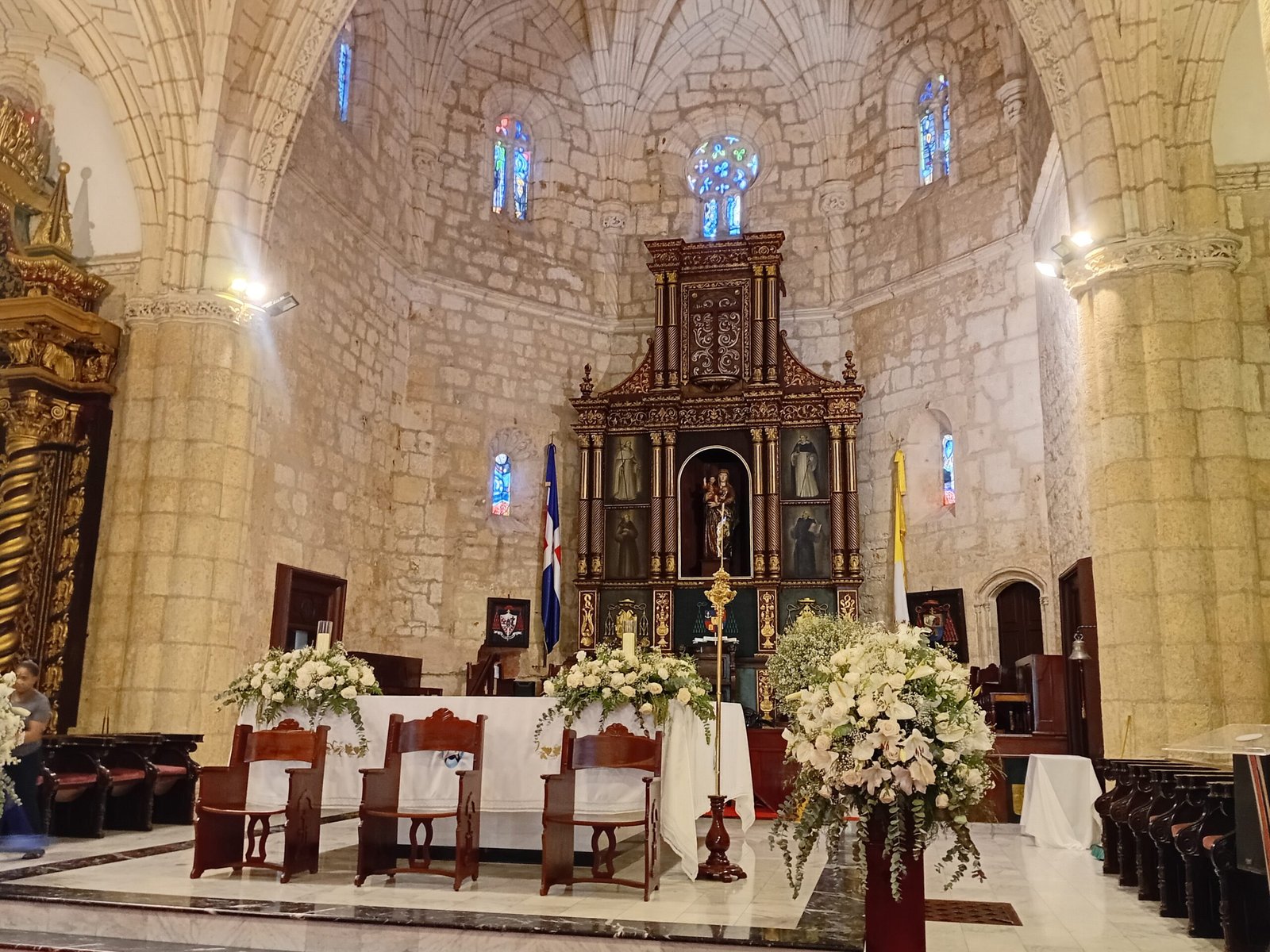
The First Cathedral also contains a striking Baroque high altar. The altarpiece uses mahogany, gold leaf, carved figures, and Solomonic columns. Religious images create a visual focus for the sanctuary. For travelers interested in religion, the altar provides an opportunity to understand how architecture, art, and worship worked together in colonial churches.
The Cathedral once held a monument connected with Christopher Columbus. According to the research, a lead box containing remains believed to belong to Columbus was discovered beneath the altar floor in 1877. The remains received great attention for more than a century. In 1992, the monument and remains moved to the Faro a Colón across the river.
Chapels, Art, and Religious Traditions
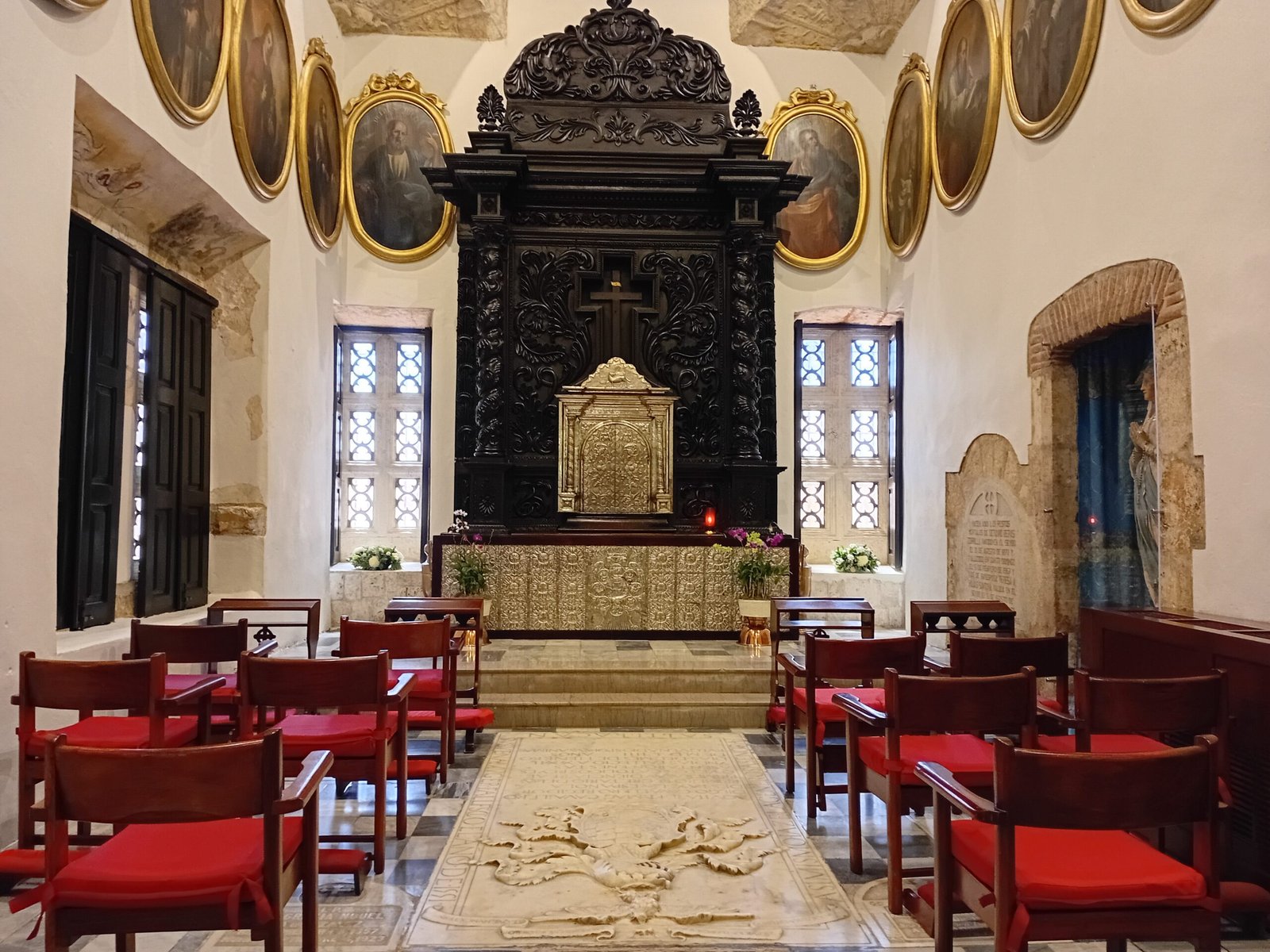
The Catedral Santa Iglesia Catedral Basílica Metropolitana de Nuestra Señora Santa María de la Encarnación o Asunción includes fourteen side chapels along the naves. Colonial families and religious brotherhoods supported many of these spaces. Some served as private mausoleums, while others functioned as devotional spaces. The chapels contain religious art, historic decoration, and objects connected with Catholic traditions. The First Cathedral offers several examples for visitors who want to explore Dominican religious heritage. The Chapel of Santa Ana includes a notable Plateresque retable and the burial place of Rodrigo de Liendo. The Chapel of San Juan Bautista contains early colonial paintings. The Chapel of Nuestra Señora de la Altagracia connects the cathedral with an important Marian devotion in Dominican religious life.
A Living Religious Landmark
The Catedral Primada de América is more than a historic monument. It remains an active religious center and serves as the seat of the Archdiocese of Santo Domingo. Regular religious services continue inside the building. National celebrations and important ceremonies also take place there. This active role gives visitors a chance to see how a historic first cathedral remains connected with contemporary religious life. The Cathedral also forms part of the UNESCO World Heritage Site in Santo Domingo. Conservation work has focused on protecting the historic structure while maintaining its religious function. Modern systems help control the interior climate and protect historic woodwork and paintings. Digital audio guides can also help visitors learn about the chapels without disturbing prayer spaces.
Why Students and Curious Travelers Should Visit
The Cathedral offers much more than a quick sightseeing stop. Local and international student groups can use the First Cathedral to connect history, religion, architecture, art, and colonial studies in one location during educational trips. Curious travelers can examine details in the stonework, study the chapels, and consider the role of religion during the early development of Santo Domingo. The building also encourages visitors to look at colonial history from several perspectives. The Catedral Primada de América remains one of the most significant historic landmarks in the Colonial City. Its Gothic structure, Renaissance decoration, Baroque interior, religious traditions, and complex history create a unique educational and meaningful setting. A visit can help students and travelers understand how architecture preserves stories from the past while remaining part of everyday life. Five centuries after construction began, the Cathedral continues to connect the history of Santo Domingo with the living heritage of the Dominican Republic. Discover the Catedral Primada de América and explore its history, architecture, and religious heritage in Santo Domingo.